


Individual Therapy: A Compassionate Guide to Personal Growth and Healing
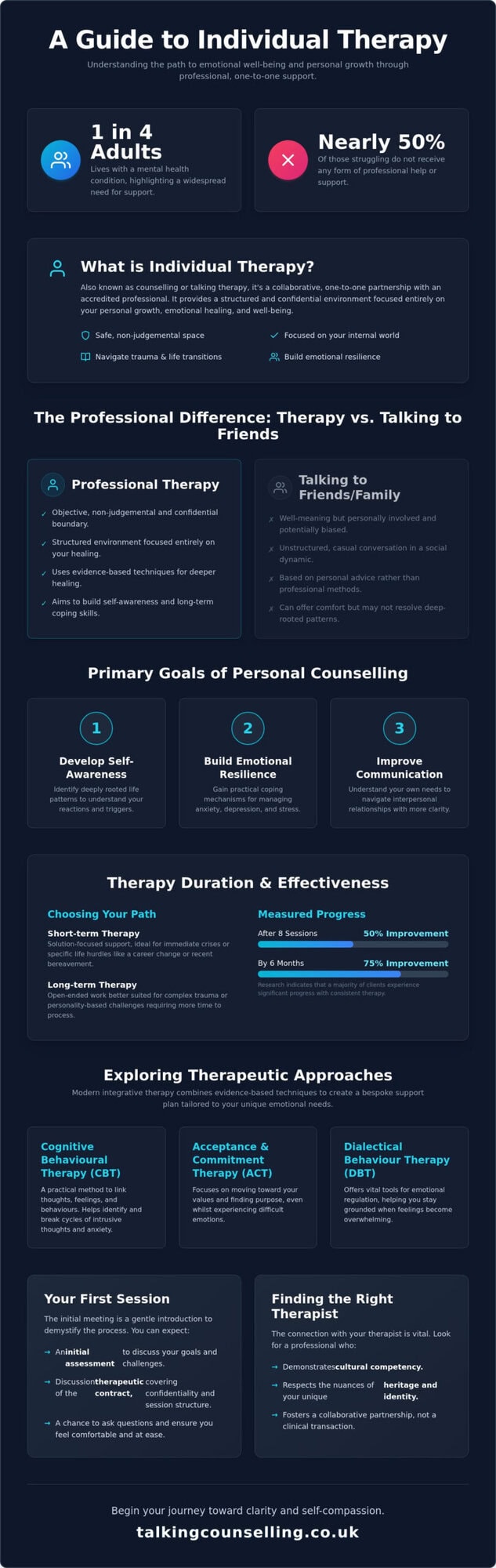
Recent reports suggest that nearly one in four adults lives with a mental health condition, yet almost half of those struggling don’t receive any professional support. You might feel trapped in negative behaviour patterns or find yourself overwhelmed by the prospect of opening up to a stranger. It’s natural to feel anxious about whether individual therapy is the right path, especially if you’re worried about the cost or finding a professional in London who truly understands your cultural heritage.
We believe that everyone deserves a safe, non-judgemental space to process past experiences and build emotional resilience. In this guide, you’ll discover exactly how individual therapy works and what you can expect during your first session. We’ll also explore how to find a therapist who respects your unique identity, ensuring your journey toward clarity and self-compassion feels like a collaborative partnership rather than a clinical transaction.
Key Takeaways
- Understand how individual therapy provides a confidential, one-to-one partnership to help you navigate trauma and life transitions with professional support.
- Learn why the objective, non-judgemental boundary of a professional relationship offers deeper healing than speaking with well-meaning friends or family.
- Discover how integrative therapy combines evidence-based techniques to create a bespoke support plan tailored to your unique emotional needs and life goals.
- Demystify the initial assessment and the therapeutic contract so you can feel prepared and at ease when attending your first session.
- Explore the vital role of cultural competency and learn how to find a therapist in London who respects the nuances of your heritage and identity.
What is Individual Therapy and How Can it Support You?
Seeking professional support is a courageous step toward understanding your inner life. At its heart, individual therapy is a collaborative, one-to-one partnership between you and an accredited professional. Unlike a casual chat with a friend, it provides a structured environment focused entirely on your personal growth and emotional healing. In the UK, you’ll often hear this process referred to as “talking therapy” or “counselling”. Whilst these terms are sometimes used interchangeably, they all fall under the broader umbrella of Psychotherapy, which aims to improve an individual’s well-being and mental health through deep, meaningful dialogue.
The core purpose of this work is to provide a safe, confidential space where you can navigate emotional difficulties, past trauma, or significant life transitions without fear of judgement. It’s distinct from group or couples work because the focus remains exclusively on your internal world. In this setting, your therapist isn’t there to mediate a conflict or manage group dynamics; they’re there to help you explore your personal history and the patterns that shape your current reality. This dedicated attention allows for a level of vulnerability and self-discovery that is often harder to achieve in social or collective environments.
The Goals of Personal Counselling
The primary objective is to help you develop a deeper sense of self-awareness. By identifying deeply rooted life patterns, you can begin to understand why you react to certain triggers in specific ways. This awareness is the foundation for building emotional resilience. Whether you’re managing symptoms of anxiety or navigating the heavy fog of depression, individual therapy provides practical coping mechanisms. This proactive approach to mental health also supports your physical vitality; specialists like Dr Ayyaz Sultan often point out that reducing psychological stress is a vital step in maintaining a healthy heart. Over time, this self-reflection often translates into improved communication skills. Understanding your own needs makes it easier to navigate interpersonal relationships with clarity and confidence.
Short-term vs. Long-term Therapy
Deciding on the duration of your sessions depends on your specific needs and the complexity of what you wish to explore. You might consider the following options:
- Short-term Therapy: Often solution-focused, this approach is ideal for immediate crises or specific life hurdles, such as a sudden career change or a recent bereavement.
- Long-term Therapy: This open-ended work is better suited for complex trauma or personality-based challenges that require more time to unpick and process.
Research indicates that therapy can be highly effective; one study found that 50% of clients saw improvement after just eight sessions, whilst 75% experienced progress by the six-month mark. Your therapist will help you decide which path aligns with your current mental health requirements during your initial sessions. This choice ensures the pace of work feels manageable and supportive for your unique journey.
Exploring Different Therapeutic Approaches and Techniques
Every person’s journey is unique, which is why modern practitioners often move away from rigid, single-modality frameworks. Integrative therapy involves combining different techniques to suit the specific needs of the individual, ensuring the support you receive is as nuanced as your own life experience. In the UK, therapists typically work within professional frameworks set by bodies like the BACP or UKCP, utilising evidence-based practices to ensure safety and effectiveness. During your initial assessment, your therapist will listen to your goals and challenges to select a modality that resonates with your personal history. Individual therapy is most effective when the method matches the client’s internal world. Cognitive Behavioural Therapy (CBT) is a practical method for linking thoughts, feelings, and behaviours to help you understand how your internal narrative drives your actions.
Cognitive and Behavioural Methods
CBT is widely used for managing intrusive thoughts and breaking the exhausting cycles of anxiety. It helps you identify the “loops” that keep you feeling stuck so you can make practical changes. If you find yourself struggling with difficult emotions that won’t go away, Acceptance and Commitment Therapy (ACT) helps you find meaning and purpose despite those feelings. It focuses on moving toward your values even whilst things are difficult. For those who experience intense emotional waves, elements of Dialectical Behaviour Therapy (DBT) offer vital tools for emotional regulation. These techniques help you stay grounded when feelings become overwhelming, providing a sense of stability in your daily life.
Depth and Relationship-Based Approaches
Sometimes, the roots of our struggles go deeper than our current thoughts. Schema Therapy addresses “life traps”, which are enduring patterns formed in childhood that continue to affect adult relationships and self-image. It’s a powerful way to understand why you might repeat certain behaviours or attract specific types of people. For those who struggle with a harsh inner critic, Compassion Focused Therapy (CFT) is an essential tool for developing kindness toward oneself and combating deep-seated shame. Humanistic and Person-Centred therapy prioritise your inherent capacity for growth, positioning the therapist as a supportive witness to your own self-actualisation. This approach ensures you remain the expert on your own life whilst receiving the guidance you need.
If you’re unsure which approach is right for you, exploring affordable therapies can be a gentle way to start your journey with a professional who understands these diverse methods. Taking the time to find the right fit is a vital part of the healing process, ensuring you feel heard and understood from your very first session.
The Professional Difference: Therapy vs. Talking to Friends
Whilst a supportive friend offers a vital listening ear, the relationship within individual therapy is fundamentally different. It’s built on a foundation of professional boundaries and ethical standards that ensure your well-being remains the sole priority. Friends often feel a natural urge to protect us or offer immediate solutions, but a therapist is trained to sit with your discomfort without trying to “fix” it prematurely. This objective distance is what makes the space feel truly safe. In the UK, practitioners registered with bodies such as the BACP are bound by a strict ethical framework, ensuring that your sessions are confidential and conducted with the highest level of professional integrity.
Professional therapy also requires specialised training to handle complex trauma or severe depression safely. It’s a structured process where the clinician uses different approaches to psychotherapy to help you unpick long-standing patterns that may be holding you back. Unlike social interactions, this relationship is intentionally one-sided. You don’t need to worry about the therapist’s emotional reaction or feel the need to “check in” on their feelings. This unique freedom allows you to be completely honest, perhaps for the first time, about your deepest worries and experiences.
The Value of an Unbiased Perspective
Friends and family are often too close to your life to remain neutral. They might have their own stakes in your decisions or avoid certain topics to prevent conflict. A therapist identifies these blind spots with a gentle, professional clarity. Instead of falling into the “advice trap”, they empower you to find your own solutions. This process builds your confidence and ensures that the progress you make is authentic to your own values rather than someone else’s expectations. You can explore your thoughts without the fear of being judged or the worry that your words will be shared amongst your social circle.
Safe Spaces and Professional Ethics
The “therapeutic hour” is a predictable, secure environment that exists outside the chaos of your daily life. It’s a dedicated time where the world slows down, giving you the space to process information at your own pace. To maintain this high standard of care, UK therapists engage in regular clinical supervision. This means a senior practitioner supports them in their work, ensuring they remain objective and effective in supporting you. This professional distance doesn’t mean a lack of warmth; rather, it creates a container where deep emotional intimacy and honesty can flourish without the complications of a personal friendship. It’s this balance of professional authority and human empathy that facilitates genuine, lasting change.
What to Expect During Your First Individual Therapy Session
Stepping into your first session of individual therapy can feel like a significant emotional milestone. It’s completely natural to feel a mixture of hope and apprehension as you prepare to open up. This initial meeting is designed to be a gentle, exploratory conversation rather than a rigid interrogation. Your therapist will focus on understanding your history and the specific challenges that brought you to seek support today. This is also where you establish the “contract”; a professional agreement covering the frequency of sessions, the fees involved (quoted in GBP £), and the strict confidentiality boundaries that protect your privacy within UK ethical frameworks.
You’ll also spend time defining what progress looks like for you personally. Whether it’s finding relief from a specific life crisis or building long-term emotional resilience, setting these therapeutic goals ensures your sessions remain focused and productive. It’s helpful to remember that the first session is as much about you interviewing the therapist to see if you feel comfortable as it is about them assessing your clinical needs.
The Practical Steps to Starting
To reduce any cognitive load and ease your anxiety, it helps to know exactly what the roadmap looks like when you begin:
- Step 1: Booking your initial consultation and completing any intake forms. These forms often ask for basic background details to save time during your actual session.
- Step 2: The “Getting to Know You” phase. You’ll share your current challenges and what you hope to achieve through the process.
- Step 3: Discussing your history. This might include your family background, cultural heritage, or any previous experiences with mental health support.
- Step 4: Agreeing on a path forward. You’ll decide on the frequency of your online sessions and how you’ll work together collaboratively.
Assessing the “Therapeutic Fit”
The success of your work often hinges on the quality of the connection between you and your practitioner. During the session, notice how you feel in their presence. Do you feel heard and safe? Is the environment non-judgemental? Don’t hesitate to ask questions about their experience with your specific issues, such as anxiety or trauma. If the initial match doesn’t feel quite right, it’s perfectly acceptable to try a different professional. Finding the right partner for your growth is a vital part of the healing process.
If you’re ready to take this first step toward clarity, you can book a consultation for individual therapy today to begin your journey in a supportive, professional environment.
Finding the Right Therapist for Your Unique Heritage and Needs
In a city as diverse as London, finding a professional who understands the specific context of your life is essential. Cultural competency isn’t just an “add-on” to clinical skill; it’s a foundational requirement for effective individual therapy. Your identity, heritage, and the languages you speak shape how you perceive the world and how you experience emotional distress. Talking Counselling acts as a bridge-builder, connecting you with accredited experts who provide affordable and culturally sensitive support. Whether you’re looking for someone who understands the nuances of East Asian heritage or you require multilingual therapy, having a therapist who “gets it” without you having to explain the basics of your culture is incredibly powerful.
Online support provides access to these specialised experts who might not be in your immediate neighbourhood. This ensures you don’t have to compromise on the quality of your care based on your postcode. If you’re navigating the process of finding the right match, our dedicated guide to finding an online therapist London residents trust can help you verify qualifications and identify culturally sensitive practitioners. For those interested in how these services operate internationally, you can discover MissionYou Health and their guide to healing through modern counselling. By prioritising a match that respects your unique story, the therapeutic process becomes a truly collaborative journey toward healing and self-compassion.
The Importance of Cultural Sensitivity
Navigating the intersection of your personal identity and mental health can be complex. In many communities, there’s still a significant stigma attached to seeking help, which can make the first step toward individual therapy feel even more daunting. A shared cultural understanding between you and your therapist can accelerate the building of trust and rapport, making the space feel safer much faster. It allows you to process trauma or life transitions within a framework that honours your background rather than ignoring it. This deep level of individualisation ensures that your growth is rooted in the reality of your lived experience.
Why Online Therapy is a Practical Choice
Choosing online support offers a level of accessibility that traditional settings often can’t match. It allows you to integrate mental health care into your life with minimal disruption. Consider the following benefits:
- Convenience: Attend your sessions from the comfort of your own safe space, anywhere in the UK.
- Reduced Stress: You can remove the pressure and cost of a London commute, making it much easier to prioritise your well-being.
- Clinical Effectiveness: Research shows that video sessions maintain the same high standards of effectiveness as in-person meetings, providing a steady and reliable environment for healing.
Our goal is to lower the emotional and practical barriers to seeking help. By offering a range of affordable therapies, we ensure that professional support remains an accessible path toward resilience and clarity for everyone, regardless of their background or current financial situation.
Book your initial assessment with Talking Counselling today and begin a partnership that truly honours your unique history and identity.
Embracing Your Path to Personal Growth
Choosing to prioritise your mental well-being is a transformative decision that requires both courage and the right professional support. As we’ve explored, individual therapy serves as a dedicated partnership, offering a level of objective clarity and professional safety that social circles simply cannot provide. By working with accredited BACP or UKCP therapists, you ensure your journey is guided by high ethical standards and specialised expertise tailored to your internal world.
Finding a professional who understands the specific nuances of your East Asian heritage or unique cultural identity shouldn’t be a barrier to healing. We’re committed to bridge-building, offering specialists in culturally sensitive counselling with affordable rates starting from £50 per session. This ensures that high-quality, inclusive support remains accessible to those navigating London’s diverse landscape. You don’t have to navigate life’s transitions or complex emotional hurdles alone; a safer, more compassionate way of living is within reach.
Begin your journey with a personalised initial assessment today. Clarity and self-compassion are possible, and we’re here to help you build the resilient, grounded future you deserve.
Frequently Asked Questions
Is individual therapy effective for treating anxiety and depression?
Yes, individual therapy is widely recognised as an effective treatment for both anxiety and depression. Clinical guidelines in the UK, including those utilised by the NHS, recommend talking therapies as a primary intervention for managing these conditions. These sessions help you identify the root causes of your distress and develop practical tools to manage symptoms, leading to improved mood and a greater sense of control over your daily life.
How much does individual therapy cost in the UK?
Private fees for therapy in the UK vary significantly depending on the practitioner’s experience and your location. In London, you’ll find a wide range of pricing, with many private sessions typically starting from £50 and increasing based on specialisation. It’s advisable to discuss fees during your initial assessment to understand the costs involved and ensure the support is sustainable for your long-term growth.
Can I have individual therapy online if I live in London?
Absolutely. Many people living in London choose online sessions to avoid the stress of a busy commute and the high costs of travel. Online individual therapy allows you to access highly specialised therapists from across the capital or the wider UK whilst remaining in the comfort of your own home, ensuring your support is both convenient and consistent.
How many sessions of therapy will I need to see an improvement?
The number of sessions required varies depending on your personal goals and the complexity of the issues you’re facing. Some people find that short-term, solution-focused work over 6 to 12 weeks provides the clarity they need for a specific life hurdle. Others may choose to engage in longer-term support over several months to process deeper traumas or long-standing life patterns.
What is the difference between a counsellor and a psychotherapist?
Whilst both professionals offer talking therapy, the distinction usually lies in the depth and length of their training. In the UK, a counsellor often focuses on specific life events or immediate distress, whilst a psychotherapist typically undergoes longer, more intensive training to work with deeper psychological issues and personality patterns. Both must be accredited by professional bodies to ensure they meet high clinical standards.
Is my information kept confidential in online therapy sessions?
Yes, confidentiality is a cornerstone of professional practice, whether sessions are held in person or online. Your therapist will use secure, encrypted platforms designed for healthcare to protect your privacy. They also adhere to strict GDPR regulations and ethical codes set by organisations like the BACP, ensuring your personal information and session content remain strictly between you and your practitioner.
How do I know if I have found the right therapist for me?
Finding the right fit is often about how safe and understood you feel during your initial conversations. You should look for a professional who listens without judgement and whose approach resonates with your personal values. If you don’t feel a sense of rapport after the first few meetings, it’s perfectly acceptable to seek a different therapist who better suits your personality and heritage.
Can individual therapy help with relationship problems if my partner won’t attend?
Yes, therapy can be incredibly beneficial for relationship difficulties even if your partner is not involved. By focusing on your own reactions, communication styles, and boundaries, you can gain a clearer perspective on the relationship dynamic. Changing your own behaviour often has a ripple effect, leading to healthier interactions and more informed decisions about your future together.

Article by
Anh Doan
With over 15 years of experience as an individual and couples therapist, Anh has extensive experience supporting clients living with complex trauma, helping them understand the impact of their experiences, develop emotional resilience, and build healthier relationships with themselves and others
Disclaimer
Disclaimer: This article is for educational and informational purposes only and does not constitute medical, psychological, or therapeutic advice. Reading this content does not create a therapeutic relationship with Talking Counselling. If you are concerned about your mental health, please seek support from a qualified healthcare or mental health professional.
If you need someone to talk to, you can contact Samaritans on 116 123 (available 24 hours a day). For urgent medical advice, contact NHS 111. If there is an immediate risk to life or an emergency, call 999. If you are unable to make the call yourself, ask someone you trust to call on your behalf.