


Postpartum Depression: A Compassionate Guide to Support and Recovery
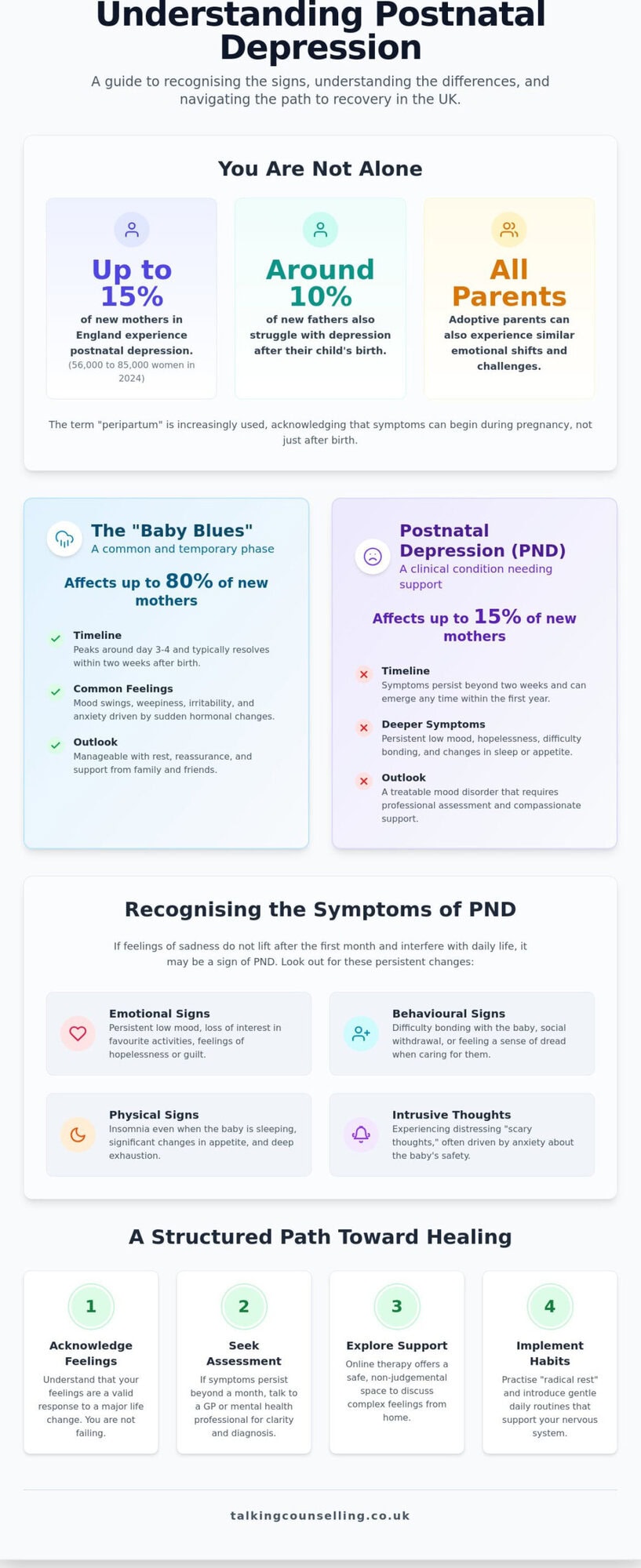
Imagine sitting in a quiet nursery at 3:00 am, holding your newborn, yet feeling an inexplicable sense of distance rather than the “instant spark” everyone promised. You might feel a heavy weight of guilt or a nagging fear that you’re failing as a parent, whilst the rest of the world seems to be celebrating. This experience is far more common than many realise. In fact, the Royal College of Psychiatrists estimates that up to 15% of mothers in England experienced postpartum depression in 2024.
It’s incredibly draining to navigate the physical demands of a new baby while managing feelings of social isolation and deep exhaustion. You probably feel like you should be “coping” better, but it’s important to remember that these challenges are a valid response to a monumental life transition. This guide will help you understand the specific signs of postnatal depression and show you how professional online support can provide a safe, non-judgemental path to recovery. We’ll explore the difference between the “baby blues” and clinical depression, look at current UK treatment options, and explain how individual therapy can help you move toward a place of grounded optimism.
Key Takeaways
- Learn to distinguish between temporary “baby blues” and the persistent symptoms of postpartum depression to gain clarity on your emotional health.
- Understand the physiological impact of hormonal changes and sleep deprivation, helping you release the guilt associated with these common struggles.
- Discover how to implement “radical rest” and gentle daily habits that support your nervous system during the recovery process.
- Explore the benefits of professional online support, which offers a non-judgemental space to discuss complex feelings from the comfort of your own home.
- Equip yourself with a structured path toward healing, ensuring you feel supported and heard whilst navigating the complexities of early parenthood.
Understanding Postpartum and Postnatal Depression in the UK
Postnatal depression, often referred to globally as Understanding Postpartum Depression, is a significant mental health challenge that follows the arrival of a new child. It’s essential to recognise that this is a clinical medical condition. It isn’t a character flaw, nor does it mean you’re failing as a parent. In the UK, the Royal College of Psychiatrists estimates that between 10% and 15% of mothers who gave birth in 2024 experienced some form of postnatal depression. This equates to roughly 56,000 to 85,000 women in England alone.
The experience isn’t limited to biological mothers. Research suggests that around 10% of new fathers also struggle with depression after their child is born. Adoptive parents can also experience similar emotional shifts as they manage the profound life changes that come with a new addition to the family. Increasingly, clinicians use the term “peripartum” to describe these symptoms. This shift acknowledges that for many, the low mood actually begins during pregnancy rather than only after delivery.
The Cultural Context of New Parenthood
Society often projects an image of the “perfect parent” who is constantly glowing and effortlessly capable. These expectations can create a heavy burden of shame if your reality feels different. Cultural heritage also plays a vital role in how we perceive mental health. In some communities, there may be intense family pressure to appear “strong” or a lack of vocabulary to describe emotional distress. Talking to a therapist who understands your specific background and identity can be a turning point. It allows you to explore these feelings in a space that respects your heritage whilst helping you build a path toward recovery.
Postpartum vs Postnatal: What’s in a Name?
Whilst the term postpartum depression is widely used in international research and media, the NHS and UK healthcare providers typically use the term “postnatal depression” (PND). The labels are clinically synonymous, but the timing can vary. A diagnosis can occur shortly after birth or may emerge at any point within the first year of your child’s life. Postnatal depression is a treatable mood disorder occurring after childbirth that requires professional support and compassion to manage effectively.
Recognising the Symptoms: Baby Blues vs Postnatal Depression
Distinguishing between the temporary emotional shift known as the “baby blues” and clinical postnatal depression is a common concern for new parents. Most mothers, approximately 80%, experience a period of weepiness and irritability that peaks around the third or fourth day after birth. These feelings are typically driven by sudden hormonal fluctuations and usually resolve within two weeks. However, when these emotions deepen or persist, it may be a sign of Recognising the Symptoms of Postpartum Depression.
Whilst the baby blues are manageable with rest and support, postpartum depression involves more pervasive symptoms that interfere with daily life. To help you identify what you’re feeling, consider the following differences:
- Baby Blues: Mood swings, crying spells, and anxiety that dissipate within ten to fourteen days.
- Postnatal Depression: Persistent low mood, feelings of hopelessness, and a sense of being “trapped” that lasts beyond the first month.
- Bonding: Difficulty feeling a connection with your baby or feeling a sense of dread when caring for them.
- Physical Signs: Significant changes in appetite and insomnia, even when your baby is sleeping soundly.
It’s also vital to understand intrusive thoughts. Many parents experience “scary thoughts” driven by anxiety, such as fearing the baby might fall. These are often distressing but different from postpartum psychosis, which is a rare, serious condition involving a loss of touch with reality. If you find yourself struggling to differentiate these feelings, speaking with a compassionate therapist can provide the clarity and safety you need.
When the “Baby Blues” Do Not Fade
The first fortnight after birth is a period of intense adjustment. If you find that your sadness hasn’t lifted after the first month, it’s time to seek a professional assessment. A helpful indicator is to look at your favourite activities. If things that once brought you joy now feel meaningless, or if you feel a sense of emotional numbness, these are key markers of PND. Recovering doesn’t mean you’re a “bad parent”; it means you’re taking a responsible step for your family’s well-being.
PND in Fathers and Partners
Depression after childbirth isn’t exclusive to the person who gave birth. Partners also face a monumental transition that can trigger emotional distress. In men and partners, PND often manifests differently, sometimes appearing as increased irritability, withdrawal from family life, or an urge to work longer hours to avoid the home environment. This can strain the relationship and the family unit. Recognising these signs early allows for the use of Couples Therapy or individual support to bridge the gap and restore the connection between partners.
The Causes and Risk Factors: Why Me?
“Why me?” is perhaps the most common question parents ask when facing the heavy fog of postpartum depression. It’s a natural reaction to seek a single reason, but the reality is usually a complex interplay of biological, psychological, and social elements. Understanding the Causes and Risk Factors of PND can help you realise that your current state isn’t a choice; it’s a physiological and emotional response to an extraordinary life event.
The biological catalyst often begins with the “hormonal crash.” Within 24 hours of delivery, your levels of oestrogen and progesterone drop precipitously. This sudden shift can trigger significant mood changes. When you pair this with chronic sleep deprivation, the nervous system becomes highly dysregulated. Sleep isn’t just about energy; it’s a medical necessity for emotional processing. Without it, your ability to manage stress or regulate your mood is severely compromised, making every small challenge feel insurmountable.
Beyond the physical, there’s the psychological weight of the transition. Becoming a parent involves a profound loss of your previous identity. Your time, body, and priorities are no longer solely your own. For those with a history of anxiety or past trauma, this loss of control can feel particularly threatening. The postnatal period becomes a time of heightened vulnerability where old wounds may resurface, requiring a compassionate and structured approach to healing.
Environmental and Social Triggers
In urban centres like London, many new parents experience what experts call a “loneliness epidemic.” You might live in a crowded city yet feel completely isolated whilst at home with a newborn. The traditional “village” or local support network has often been replaced by digital connections that don’t offer the same practical relief. Financial stress and the pressure to return to work before you’re emotionally ready only add to this burden, creating a perfect storm for emotional distress.
Biological and Physical Factors
Physical health also plays a part. Sometimes, symptoms of depression are exacerbated by underlying thyroid issues or nutritional deficiencies that are common after childbirth. Addressing physical health is a vital component of holistic recovery; for instance, you can visit Oakpark Physiotherapy to see how evidence-based, patient-centred care supports new parents. If you have a genetic predisposition or a family history of mood disorders, your risk may be higher. Additionally, birth trauma can leave lasting emotional scars. The flashbacks or hypervigilance associated with a difficult delivery can often mimic or directly trigger the onset of PND, complicating the recovery process if left unaddressed.
Practical Steps for Managing PND Daily
Managing the daily reality of postpartum depression requires a fundamental shift from “doing it all” to protecting your limited energy. Recovery isn’t about a sudden transformation; it’s about small, sustainable shifts that respect your current capacity. The first and most vital step is prioritising “radical rest.” In the context of PND, sleep shouldn’t be viewed as a luxury or a reward for finishing chores. It’s a medical necessity. When you’re deprived of sleep, your brain’s ability to regulate mood and process heavy emotions is severely compromised. Work with your partner or a trusted friend to ensure you have protected windows for sleep, even during the day.
Lowering the bar is equally important. Give yourself radical permission to ignore the laundry, the unwashed dishes, or the unread messages. Your priority is your well-being and your baby’s basic needs; everything else is secondary. Whilst it may feel difficult to leave the house, gentle movement can help regulate a frazzled nervous system. A five-minute walk to a local park or simply sitting in the garden for fresh air can provide a vital break from the four walls of the nursery. If these steps feel impossible to take alone, accessing individual therapy can provide the professional guidance needed to start your recovery journey.
Nutrition and Body Care
Maintaining your energy levels is essential, especially whilst breastfeeding or bottle-feeding. Focus on simple, nutrient-dense snacks that don’t require preparation, such as nuts, fruit, or yoghurt. Staying hydrated is also a direct contributor to mental clarity; even mild dehydration can worsen feelings of fatigue and brain fog. Crucially, try to avoid the “comparison trap” on social media. Many parents feel inadequate when viewing curated images of post-baby bodies or “perfect” routines. Remember that these images rarely reflect the complex emotional reality of new parenthood.
Micro-Moments of Self-Compassion
You can use Compassion Focused Therapy techniques to quiet the “inner critic” that tells you you aren’t doing enough. When you notice a self-critical thought, try to acknowledge it without judgement and replace it with a kinder, more realistic statement. Simple mindfulness exercises, such as focusing on the sensation of your breath for two minutes whilst the baby naps, can help anchor you in the present moment. Practising self-compassion is a powerful tool for reducing the pervasive parental guilt that often accompanies PND. By treating yourself with the same kindness you would offer a friend, you create the internal safety necessary for healing.
How Online Therapy Supports Recovery from PND
For many new parents, the prospect of leaving the house for an appointment can feel like an insurmountable hurdle. Coordinating a pram, a nappy bag, and a crying infant whilst navigating London transport or finding a parking space often adds more stress than the outing is worth. Online therapy removes this physical barrier entirely. By attending sessions from your own home, you can focus your limited energy on your recovery rather than the logistics of travel. This accessibility is a vital bridge for those experiencing postpartum depression, as it ensures that professional help is available even on the days when getting dressed feels impossible.
Beyond the logistical ease, digital sessions provide a unique sense of psychological safety. Discussing “taboo” thoughts, such as feelings of resentment or a lack of connection with your child, requires a high level of trust. Being in your own familiar environment can lower your emotional guard, making it easier to be honest with your therapist. We use evidence-based modalities like Acceptance and Commitment Therapy (ACT) or Schema Therapy to help you navigate these complex emotions. These approaches allow you to address deep-seated patterns and learn to observe intrusive thoughts without being overwhelmed by them. This structured support is available through a per-session fee model, making it a sustainable choice for families managing a new household budget.
The Flexibility of Online Counselling
One of the greatest challenges of early parenthood is the lack of a predictable routine. Online sessions allow you to fit therapy around nap schedules and feeding times, providing a level of flexibility that traditional clinics cannot match. There is also a profound comfort in being in your own safe space whilst discussing difficult emotions. If you are looking for a way to prioritise your mental health without the stress of travel, Online Individual Therapy London offers a professional and adaptable solution that meets you exactly where you are.
Finding the Right Match
The success of your recovery often depends on the quality of the partnership between you and your therapist. This begins with an initial assessment to ensure a good fit, allowing you to feel confident that your guide understands your unique situation. For families from diverse backgrounds, accessing multilingual or culturally sensitive support is essential. We work to connect you with professionals who respect your heritage and identity, ensuring that your specific life experiences are at the centre of the healing process. Taking that first step can feel daunting, but organising a consultation is a simple, affirmative action that signals the start of your journey toward grounded optimism and lasting growth.
Embracing Your Path to Recovery
Navigating the early stages of parenthood whilst managing postpartum depression is a profound challenge, yet it’s one you don’t have to face alone. We’ve explored how recognising the difference between temporary blues and clinical symptoms is the first step toward clarity. By prioritising radical rest and seeking a non-judgemental space to process your thoughts, you can begin to reclaim your sense of self and build a deeper connection with your family, eventually reaching a place where you can enjoy documenting these precious early days with Just Tina Photography.
Recovery is a collaborative journey that respects your unique heritage and life experience. Our accredited therapists bring over 15 years of experience to every session, specialising in culturally sensitive and East Asian heritage counselling. With affordable rates starting from £50 per session, professional support is both accessible and sustainable for your family’s future. You deserve to be heard in an environment that understands the nuances of your story and your identity.
When you’re ready to move from survival to growth, we’re here to guide you. Book an initial assessment for compassionate online therapy to begin your transition toward a brighter, more grounded chapter of parenthood. You’ve already shown incredible strength by seeking information; now, let us partner with you in your healing.
Frequently Asked Questions
How do I know if I have postnatal depression or just the “baby blues”?
The main difference lies in the duration and intensity of your feelings. Whilst the “baby blues” usually fade within ten to fourteen days as hormones stabilise, postnatal depression persists for weeks or months and significantly interferes with your daily life. If you feel a persistent low mood, a sense of hopelessness, or a loss of interest in things you once enjoyed after the first month, it’s likely more than a temporary shift.
Can fathers or partners get postnatal depression too?
Yes, research indicates that approximately 1 in 10 new fathers experience depression during the first year after their child is born. Partners face similar triggers to biological mothers, including chronic sleep deprivation, financial pressure, and the profound psychological shift into a new identity. Recognising these signs early is vital for the health of the entire family unit and the well-being of the newborn.
Will I be judged or reported if I tell a therapist I am struggling to bond with my baby?
You won’t be judged or automatically reported for struggling to bond; this is a very common symptom of postpartum depression. Therapists provide a confidential, professional environment where you can speak honestly about your feelings without fear of shame. Safeguarding procedures only apply if there is a clear, immediate risk of serious harm to you or your child, which your therapist will discuss with you transparently.
How long does postnatal depression typically last without treatment?
Without professional support, postnatal depression can last for many months or even years, potentially becoming a chronic condition. Whilst some individuals find their mood lifts eventually, untreated symptoms can strain relationships and impact the child’s emotional development. Seeking help early creates a much clearer path toward recovery and prevents the situation from worsening over time as the child grows.
Is online therapy as effective as in-person counselling for PND?
Yes, clinical studies consistently show that online therapy is just as effective as in-person sessions for managing mood disorders like depression. For new parents, the digital format often proves more successful because it removes the logistical stress of travel and finding childcare. You can receive the same high standard of professional care and evidence-based treatment from the comfort of your own safe environment.
What should I do if I have thoughts of harming myself or my baby?
If you have thoughts of harming yourself or your baby, you should seek immediate emergency support through the NHS. You can call 111, visit your local A&E department, or contact your GP for an urgent appointment. These thoughts are often a symptom of severe emotional distress or postpartum depression, and getting professional help quickly is the most responsible step you can take for your safety.
Can I still breastfeed if I am taking medication for depression?
Yes, many antidepressant medications are considered safe to use whilst breastfeeding. Your GP or a specialist mental health professional can help you weigh the benefits of treatment against any minimal risks to your baby. It’s important to have an open, non-judgemental conversation with your healthcare provider to ensure you receive the support you need without having to compromise your feeding goals.
How can I support a partner who I think might have postnatal depression?
Supporting a partner involves a balance of practical help and empathetic listening. Take over household chores and night-time feeds to allow them to get radical rest, and encourage them to speak with a professional without applying undue pressure. Remind them that what they’re feeling is a valid medical condition, not a failure, and that recovery is a shared journey you will navigate together.

Article by
Anh Doan
With over 15 years of experience as an individual and couples therapist, Anh has extensive experience supporting clients living with complex trauma, helping them understand the impact of their experiences, develop emotional resilience, and build healthier relationships with themselves and others
Disclaimer
Disclaimer: This article is for educational and informational purposes only and does not constitute medical, psychological, or therapeutic advice. Reading this content does not create a therapeutic relationship with Talking Counselling. If you are concerned about your mental health, please seek support from a qualified healthcare or mental health professional.
If you need someone to talk to, you can contact Samaritans on 116 123 (available 24 hours a day). For urgent medical advice, contact NHS 111. If there is an immediate risk to life or an emergency, call 999. If you are unable to make the call yourself, ask someone you trust to call on your behalf.